
Don't believe the hype
Meditation is your best friend in a world set up to delude you, but you have to know what is real before you can see what isn't.

A very happy and forward-looking new year to you.
This is the year I have waited for ever since I met the internet in 1999. The year the internet trains us to doubt ourselves.
I just couldn’t fathom how the energy of instant information could go any other way than coming for our throats. Now we are facing the monster, and we don’t even know how big it is, because we don’t have access to the zoo that bred it.
But we do know that it is almost only seen as a problem that needs a solution. But the solutions aren’t coming from outside, because nobody has the money or the power to do anything about it.
It’s up to us, even without money or power, to do something about it.
And we don’t have to be creative, we have to be decisive. This is not a time that is going to meet its hero in the discovery of new solutions to new problems. The new problems are not problems, they are attacks. The main weapon is deception and sowing seeds of doubt and disbelief. Of exhausting our capacity to even think about resistance. You know: blitzkrieg.
How do we arm ourselves against a blitzkrieg of deception? (I’ll tell you in a moment.)
I don’t know of any modern methods that arm us against this turn toward deception. Abstinence could help, but it isn’t practical when all of our finances and communications have been sucked into the cloud and made us dependent on WiFi.
But all of this is so fresh, breakingly new that “modern methods” don’t have time to refine themselves, prove themselves, and build a loyal following. Especially with the speed of AI building itself demonically behind the curtain of private enterprise. Today is different than yesterday. Next week, next month, what will be happening?
We don’t have a modern solution. If we did, the problem wouldn’t be as overwhelming.
But we do have a solution, it just isn’t “modern”. It’s ancient.
The solution has been here for a long time.
That solution is meditation training. The purpose of meditation training is to develop the aspect of our intelligence which sees what is real and distinguishes it from what isn’t real. Once that is established, meditation training works on our character, it builds strong ethical boundaries of what we will engage, and it leverages incredibly powerful intentionality to keep us strong and getting stronger. In a sense, it makes us antifragile. (Antifragile: able to improve and strengthen because of stress, uncertainty, and disruption—not despite them.)
It works. And not just to protect us from tech bros and their sinister magic. It does that first because (in our case) that is what is threatening our integrity, but then it goes well beyond this inner strengthening and introduces us to the depth of what we are. And as you know, this “what we are” has been a big deal in human history. This is, after all, the tradition of waking up, becoming wise, becoming enlightened by directly seeing what we are. Which isn’t going to happen without meditation, otherwise it would. (And it doesn’t — don’t believe the hype.)
Enlightened in this sense doesn’t mean what we want it to mean. It doesn’t mean “a little wiser with age” and it doesn’t mean “in the know” about what’s really going on in the world. It means something far deeper, and far outside of what we are used to hearing about all day every day. Enlightenment is the meaning of life, and even though we only know how to make jokes about such a naïve concept, millions of people over thousands of years were not joking. They were waking up.
Enlightenment wouldn’t still be a thing if it weren’t associated with so many outstanding people from every age, people who practiced and developed through meditation.
So this is the year to begin meditation training and sharpen your inner strength, if you haven’t already. But before you do, you should know something.
The hype ain’t real
There are two ways to come at meditation.
You can do it on your own terms.
You can do it on reality’s terms.
The first isn’t worth much, but it’s how most of us begin, probably because we listened to some hype. Could be new hype, like people pushing Headspace and other meditation apps. Could be Instagram slop.
New hype is shallow and springs up to draw attention to the person sharing it. It is all about their life, how things are going for them, how awesome, how game-changing their new routine is, and how meditation has been critical to their success. For those who know what meditation really is, this level of misguidance is obscene.
But it also could be old hype.
Even though I started out with it in my youth, I would tag Autobiography of a Yogi by Paramahansa Yogananda as old hype. It is a never-ending source of fascination for people who crave “spiritual experiences” and “god realization” — with plenty of miracles. It is not a book taken seriously by anyone I know, after more than 30 years of practice, training, teaching, and collaboration. Most of us loved it in our early days, and then realized what it was.
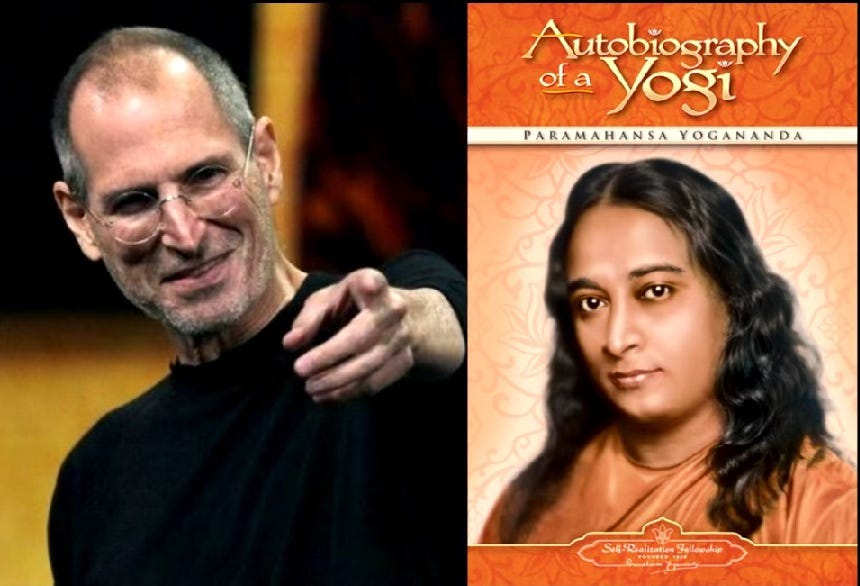
But it is still popular, especially among people who don’t yet know how to recognize hype and avoid it.
This may be a gut punch to some readers. I get that, and I was gut-punched in that very way many years ago. I was a born-again yogi in my 20s after reading this book and believing that it was what meditation is all about. (I cringe writing this.)
But I still liked reading it, and I credit it, along with certain plants that grow all over the world, with inspiring me to look further at life.
It has some good points, too, and can be inspiring. But so much of it is hype; it just can’t be taken seriously at this point in time where meditation has had 80 years of dedicated transmission and responsible practice. The hocus-pocus of Yogananda’s presentation has not aged well. Want to look a little simple? Talk to your most intelligent friends about nearly anything in Autobiography of a Yogi. Or, talk to a genuinely masterful Tibetan meditation teacher about the same.
Many times in my years of teaching I have had to help people who got their start with Yogananda come down to earth and let go of their fantasies, their cravings for experiences of visions, energies, immortal masters calling to them across lifetimes. Before, I thought it was just me, that I went too far in believing Yogananda’s book. (And I am careful here to say his book, not him. I have heard, but don’t know with certainty, that his original manuscript was doctored to make it popular. If that’s the case, who knows what he was really like?)
Cut through that hype
This childlike gullibility is what prompted Chogyam Trungpa to focus exclusively on the idea of cutting through “spiritual materialism” in the 1970s. The world he and other legitimate yogis from Tibet found when they came here was one saturated with the fantasy of meditation that Yogananda, probably unintentionally, set in motion. From there, Maharishi Mahesh Yogi took over and made millions. Then Sai Baba, and now Sadguru. Hype and fantasy, never aimed at critical thinking people, always aimed at the gullible. If you aren’t gullible, you don’t listen to the likes of Sadguru, you just click away from his face when you see it before you have to listen to him making stuff up.
One last thing about Yogananda (this was not intended to be a post about him or his book). As I said above, I liked reading it a lot. I also liked that it pointed me to non-hyped figures, such as Ramakrishna and Ramana Maharshi. Yogananda had a generous spirit.
His book, however, reads like a manifesto for the born-again. Tired of the American-dream-rat-race-get-a-Cadillac vision? Just seek “god-realization” and be at one with Christ and Krishna, who as it turns out, are and always were, exactly the same. Yogananda acts astonished that we all didn’t know that the Bible was written by yogis like himself who practiced in exactly the same way he tells you to. He also suggests that all his teachers were reincarnations of biblical figures.
Yet, I recently picked up an original edition, with fewer posthumous additions and Christian appeasements. I started reading it last month, and just…couldn’t. The mashup with Christianity is so overtly pandering that I feel dirty reading it. He’s making stuff up. Or maybe it wasn’t him, maybe it was his editors. I don’t know.
Hype vs. Real Talk
So that is the hype side of starting meditation: it confirms what you want meditation to be: an exciting experience without needing drugs. It creates easily imagined outcomes that make sense according to its own mysterious logic.
It’s just that none of it is real, just hyperbole and fantasy.
So what is real meditation?
Real meditation is meditation not on your terms, but on the terms of the way things actually are, and the way experience unfolds when you begin to unwind your confusion skillfully, which is what meditation instructions have always been for.
Not for creating mystical experiences, not for stimulating currents of energy in your spine. Not for seeing visions of gods and goddesses, or looking into past and future lives. Not for feeling great, not for looking radiant. Not for living forever.
Those are what meditation is not for.
Meditation is for preparing yourself to come face to face with the naked reality of being, without concepts, without any support whatsoever. It takes courage and discipline and above all, training. It’s hard to hype this, just like it’s hard to hype growing up.
Meditation is not on your terms because your terms are the terms of confusion and fear and getting things wrong again and again.
Remember: you didn’t get into the bind of your life right now by meditating your way there. But you did get into this bind on your own terms. That should be enough to stop you in your tracks. At least it should be once you see it.
But what if you can’t see it? What if you just don’t understand what your terms are doing to you? You’re in luck.
Meditation will help you to see it. Then you can begin to wake up much further, even all the way (which is what enlightenment means).
How do you know hype from reality?
It’s easy.
Let’s use the term hype for what we can all probably recognize as hype. Marketing speak. Persuasion. Promises and excitement.
And let’s use the word reality for the actual teachings on meditation that come from reality and the traditions that help you into it.
The teachings on meditation come from the body of knowledge known as dharma. Dharma means, essentially, the practical knowledge for waking up. A good translation these days might be “real talk.” Someday I’ll make a stronger case for that.
Hype is never about reality. It’s about unreality.
Dharma, the teachings of meditation, is always, exclusively about reality.
Hype
Hype talks about experiences, things you can imagine and desire.
Hype is always about everything that doesn’t really matter and couldn’t really matter because it isn’t true. It’s inflated. Hype is a form of deception.
Reality
Reality talks primarily about the challenges of using authentic practice to discover reality and wake up. Beyond that, and in a much deeper level of discussion, reality talks about the nature of reality, of seeing it directly and thereby letting go of confusion.
Real talk about real meditation doesn’t read like an advertisement. It reads like a diagnosis from a specialist.
It doesn’t ramp you up, it slows you down. If you take it to heart, you begin to change your ways. You expect fewer of your dreams to come true, and care less and less about them because you see them for what they are: dreams. If dreams can come true then they aren’t dreams. But dreams are dreams. Practicing reality, which is what meditation really is, lets you begin to see the reality that is already true. And it enables you to see right through dreams as they appear.
Early on that takes effort; a lot of effort. Later, it takes no effort at all. You see, you know, you are beginning to wake up.
In a sense, the first task of real talk about discovering reality is to show you the illusions you have bought into, and to remain at your side while your vision clears. Once you have taken the time to learn it honestly, meditation is always by your side, but not as a crutch. It is more like a map.
Whose terms make the most sense?
When you meditate on your own terms, you don’t really meditate.
Of course you can call it whatever you want. But centuries of meditators would not call what you are doing “meditating.” They would just describe it as fantasy, as thinking, as self-delusion. Nobody cares when you meditate on your own terms, it’s like you have opted out of the challenge of waking up and opted in to the promotion of your dream world. And nobody is going to rescue you from self delusion, either. That should give you chills. It gives me chills.
Real meditation is not available to us on our own. It is a pathway to reality that begins right in the very center of our blind spot. We need a helper, a teacher to point it out. That’s how it works.
Waking up is up to you. And of course, you need somebody else to help you see the path to waking up. So it is up to you, but you need help. And this isn’t a contradiction.
And trust me, a lot of us in the meditation community spent a lot of time in the hype dream of spirituality, the type Yogananda’s book encouraged in the 1940s, all the others, up to Sadguru today, continued. I sure did.
Most people in the West who have successfully taken up the real practice of meditation started out following purveyors of hype. They were the easiest to find, they were in our face on every bookshelf, leaping forward whenever someone asked someone about meditation. Chances are, you would be handed something full of hype.
At some point, we had to wake up and get help, just like we do when we’ve been drinking our life away and decide to stop with the help of a group, a set of friends who only ask that we own up to our actions.
Hello, my name is Jeffrey and I believed a lot of the bullshit put in front of me by sneaky spiritual-seeming hype peddlers.
We are no better than anyone else, we all made the same easy errors. Eventually, we got wise and learned the real thing. Takes time, takes facing fears, takes perseverance. But waking up is waking up, and once you get a taste of what that means, it doesn’t matter how much it takes. You’re going to do it.
For 2026, give reality a try. Otherwise, along with your mind being infiltrated from the outside by AI and all of its deceptions, your meditation, which should be your protector from delusion, will be working against you from the inside.
Yes, give reality a chance.